East Coast travels fills me with a profound awareness of the newness of the state and region I come from. That is, from the standpoint of non-Indigenous peoples. It too is a common observation I’ve shared with other “West-Coasters” making similar journeys. I risk being repetitive; certainly I’ve written about it before. Russ and I returned this week from 11 days in New England and Quebec. It was what often today feels like a rare opportunity: to have enough time during the day to make minute by minute decisions on what to do next, how long to sit or walk, or where to venture.
it was particularly relevant for me to interrupt my blog crafting so to attend the Indigenous People’s Day celebration held at Clackamas Community College in Oregon City. As I sat with my head still filled with colonizing stories of our past and present, Mayor Denyse McGriff read to us the proclamation for this day. She too reminded us that we all have stories, some mixed up together, and many for People of Color yet unwritten, shared or acknowledged by some for too long. Native flute inspired music and songs and words of musician Jan Michael Looking Wolf danced in my head: “We all once were indigenous to Mother Earth before wars and colonization.” That spirit is what needs to carry us forward in our lasting efforts for community inclusion and sometimes, too, reparation.
The last time Russ and I traveled together for any length of time was our decade ago October bucket trip to Ireland. On that trip I was reminded about one line of my great greats who fled Ireland like many, searching for new opportunities first in Canada and soon after New England. These great great grandparents of mine, were the parents of William Montgomery, the great grandfather I’ve mentioned before as an early Oregon “Footballer” and a longtime manager for his father-in-law’s J.K. Gill Bookstore.
William Montgomery’s grandfather, Alex Montgomery (born in 1793, Fermanagh Northern Ireland) married Hannah Blakely in Tyrone Northern Ireland in 1826. William’s father (my great-great grandfather) Hugh was born in 1839 in Eniskillen, Fermanagh. Imagine! Hugh’s birth year was one year before Chloe arrived in the Oregon Country and two years after William Willson’s arrival; both with the Jason Lee Missionaries. Yes. This is what I come from.
From Dede’s Blog: Digging for roots
Back in October 2014, we had been surprised by my dad’s death only a few months prior. Those closest to me may remember how it was during the long flight out of Portland as we headed to Dublin via Amsterdam when I began to shape what would later become My Music Man. The shared affinity between this October 2024 trip brimming with ships, river highways and ports, with Dad’s 2014 memorial service aboard the Oregon Maritime Museum’s Steamer Portland does make me teary. Amping up the sentimentality is the photo album left behind by my ever accomplished Mom, describing my parents (post remarriage) 1997 New England adventure. Mom was just three years younger than I am now.
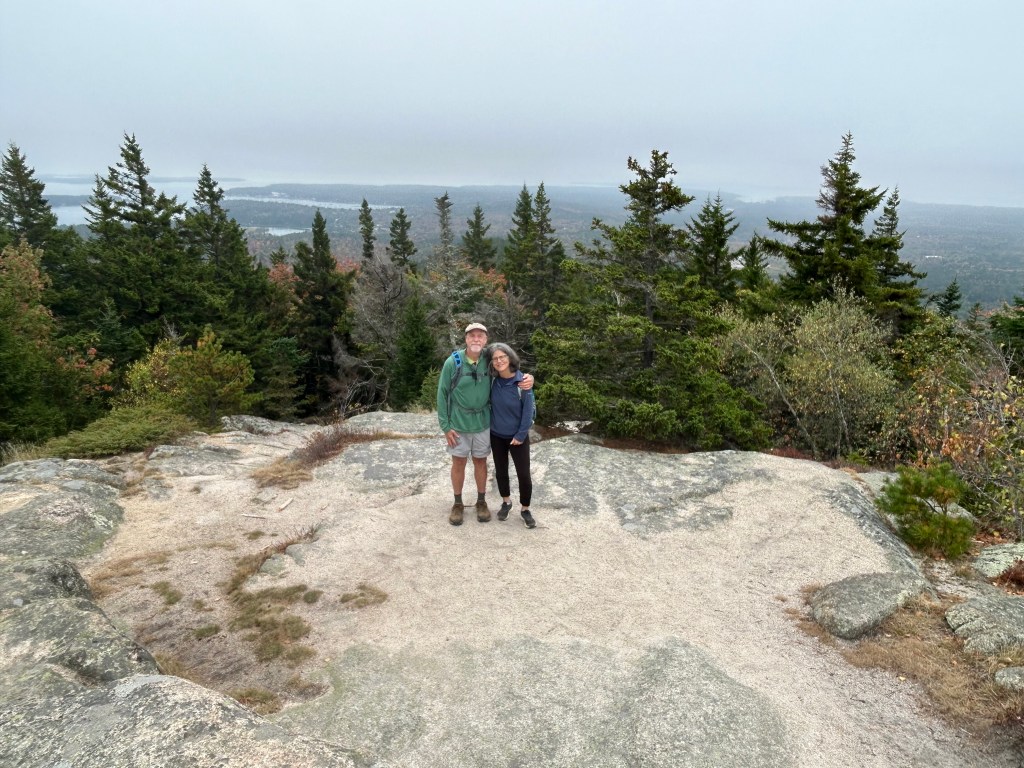
I don’t intend to share a detailed travelogue as some do. Our 11 days was sufficient for us this time, even though there was much more to see. We gave ourselves plenty of time to meander on smaller roads, particularly along the coast of Maine and through Vermont. And although I’m not sure either Russ or I planned the trip because of it, we too celebrated our 36th anniversary on the trip. I’m grateful we both love to walk and explore. And to also grant each other independence as needed to enjoy a bit of solitude, or explore things the other may be less interested in. (Yes, Russ knows that I need to step inside every bookstore I spot, even if I don’t intend to buy another book.) Hours of walking was clearly a backbone of this trip for us whether in old Quebec City or on the trail at Acadia National Park.
Portsmouth, New Hampshire


Although our favorite breakfast was taken at the less than historic but equally famous original Friendly Toast, mostly Portsmouth took us back to those earliest stories of U.S. colonization: wars and relationships with Indigenous Peoples and the British. My first thought as we began to walk the streets of this historic town was how my third great grandfather William Willson had been born just over 100 miles away in Charleston New Hampshire. It wasn’t hard for me to imagine how exposure to these historic harbors enticed him first to a job on a whaling ship, and later to join the Jason Lee 1837 expedition, traveling around the Horn by sailing ship to work as mission carpenter.
Bath, Maine

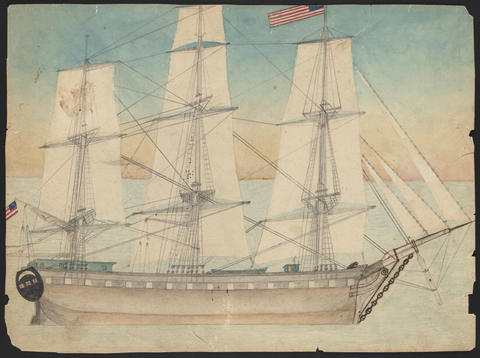
Bath is commonly known as “The City of Ships” because of all the sailing ships that were built in the Bath shipyards. Shipbuilding, logging, river highways–it’s no surprise that our two U.S. coasts share top industries and trades. Yes, I thought about ships and shipbuilding as we hung out in this shipbuilding center where most sailing ships were built. As I looked out into the river, I wondered if either the Diana, the ship carrying William and other first Jason Lee missionaries in 1837, or the Lausanne, carrying my third great grandmother Chloe Clark and the other 50 Jason Lee “reinforcements” in 1939 was built here before setting off to Oregon Country.
Once home I spent part of a Saturday diligently seeking information about where those two ships were crafted, but to no avail. I’d love to think it was Bath, but perhaps more likely a closer shipyard like Brooklyn Naval Ship Yard, given both ships sailed from New York Harbor. If I were more like Mom I might spend weeks on a quest to attempt to answer this question. If I were Dad, I’d probably have a smart maritime historian buddy to query. Me? I’m simply satisfied by remembering how much my spirit was touched by these harbors and ports, and the historic town of Bath. I’m okay not knowing all the details. What I do know thanks to information shared in Bath and online is that it was once home to 200 shipbuilding firms, beginning in 1743 with Jonathan Philbrook and sons. Bath became the nation’s fifth largest seaport by the mid- 1800s, launching roughly 5,000 vessels including clipper ships.
Fifty-one men, women, and children took passage on the 600-ton, three-masted barkentine Lausanne, leaving New York harbor in October 1839, with Captain Josiah Spaulding at the helm.
Lausanne Port of Embarkation: New York, Oct. 18, 1839
stops: Rio de Janeiro, Valparaiso, Honolulu
Arrived Columbia River May 21, 1840 (192 days at sea)
Riding the Wind: Cape Horn Passage to Oregon, 1840s-1850s; Paul G. Merriam; Oregon Historical Quarterly, Vol. 77, No. 1 (Mar., 1976), pp. 36-60 (25 pages)
The Diana, an American registry, brig, with Capt. Hinckley as master is said to have arrived from New England at the Columbia River on May 18, 1937. I find less about this ship as compared to the Lausanne, I imagine likely because it wasn’t seen as significant to development of the later failed Methodist missionary effort.
Scenes from Maine
Although I had never before been to Maine, my familiarity with a few adored books made me feel that I was coming home. Among my most favorite childhood books (and two I have been sharing with my grandson) are Robert McCloskey’s Blueberries for Sal and One Morning in Maine. In fact, during the pandemic I was invited to read a story streaming from West Linn Public Library for community storytime, and chose to read this book about Sal. Looking out to the islands off the shore of Maine reminded me of the “Buck’s Harbor” ice cream trip in One Morning in Maine, and the delightful book, Time of Wonder. And yes, Maine author Elizabeth Stout is one of my favorites.


Quebec City, Canada
As we made our way up to Quebec City, we followed the Kennebec River through part of Maine as if it was all part of the greater plan. I thought about the importance of this water route to this area from the St. Lawrence seaboard just as our Columbia River serves us in the West. I thought of my various generations of folks reliant on boats, ships and waterways (Chloe and William, Steamboat Engineer Sam Gill) and boat lovers (my grandparents, parents, and brothers). Today, advocates in our own corner of Oregon work to get our Willamette Falls Locks operating to reestablish that connection between upriver and downriver Willamette, as well as achieve national designation for this Willamette River Heritage Area.
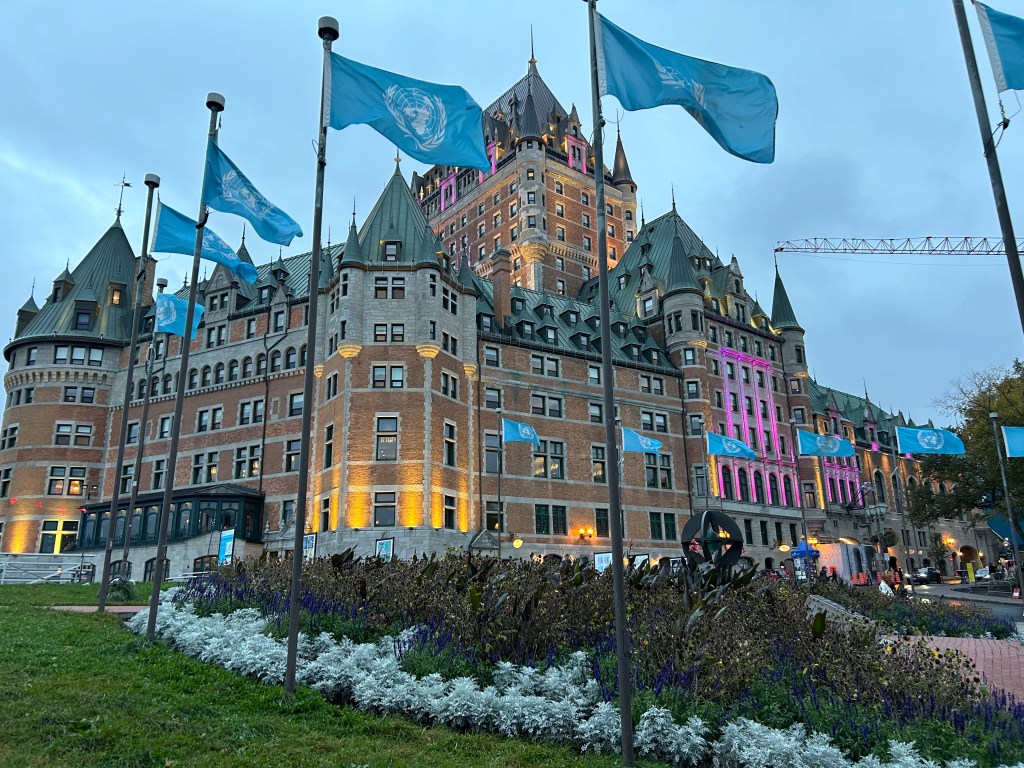
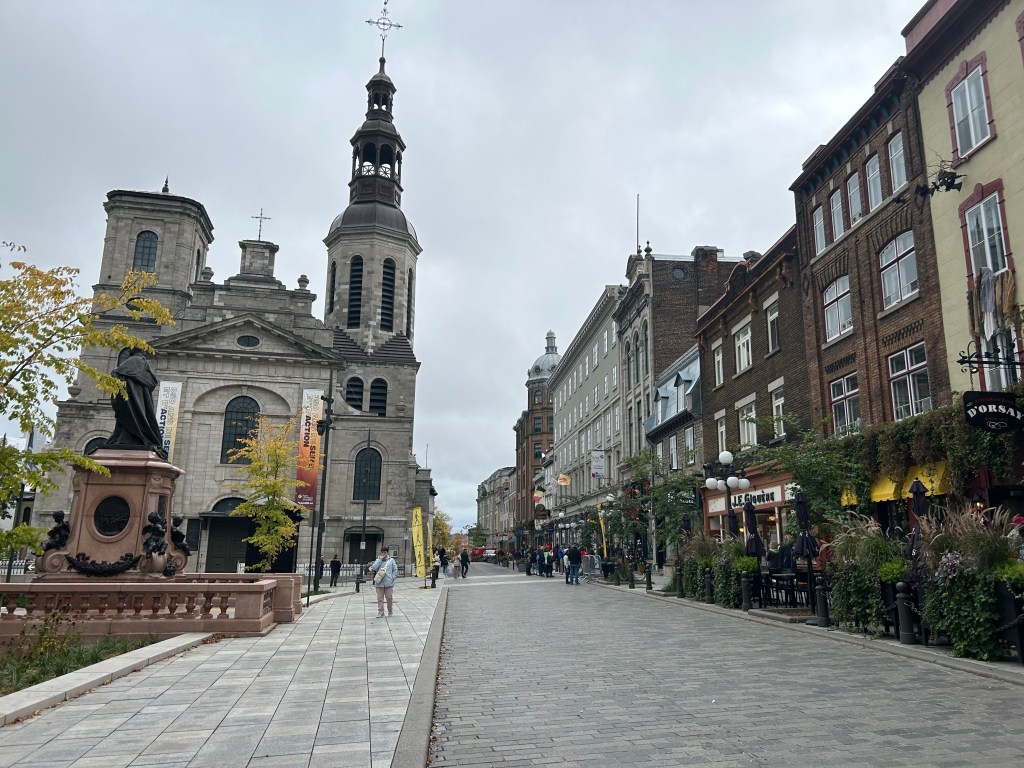
The easiest thing to say about Quebec City is that it needs to be on one’s bucket list. I was grateful we selected an older (though not fancy) hotel inside the walls of Old Quebec. Walking, learning, eating, watching. And yes, everyone is correct when they say you feel like you truly are in a foreign place. A couple of photos can’t do justice to this part of this trip. If you’ve never been, take nearly everyone’s word that you do need to get there if you can. (Oh, and if the marathon happens to be on take heed to any warnings about road closures. Just saying.)
Montmorency Falls
Having written about our own Willamette Falls, and Russ’s work with the Willamette Falls Locks Authority and the Willamette Falls & Landing Heritage Coalition, we knew we needed to fit in this visit as we made our way onward to Montreal. I felt compelled to look a bit at the “stats” of the Falls, compared to others, and learned this: Montmorency Falls is 272 feet in height with a water flow rate of 4,600 cubic feet/second. New York’s Niagara Falls boasts a height of 167 feet yet a flow rate of 85,000 cfs. And while our own Oregon’s Willamette Falls sits at only 40 feet, its flow is nearly 31,000 cfs!


Montreal, Quebec
The only time I had been in Quebec prior was to attend and present in a conference back in 1987! While I tried to sightsee a bit on that trip, there was no comparison to how much we walked and saw this time. And while we almost didn’t ride on the LaGrande Roule de Montreal, it was spectacular. And for my friends working in construction, I must say I was in awe and surprised by the challenging (around the clock) construction work within the streets of the historic parts of town.
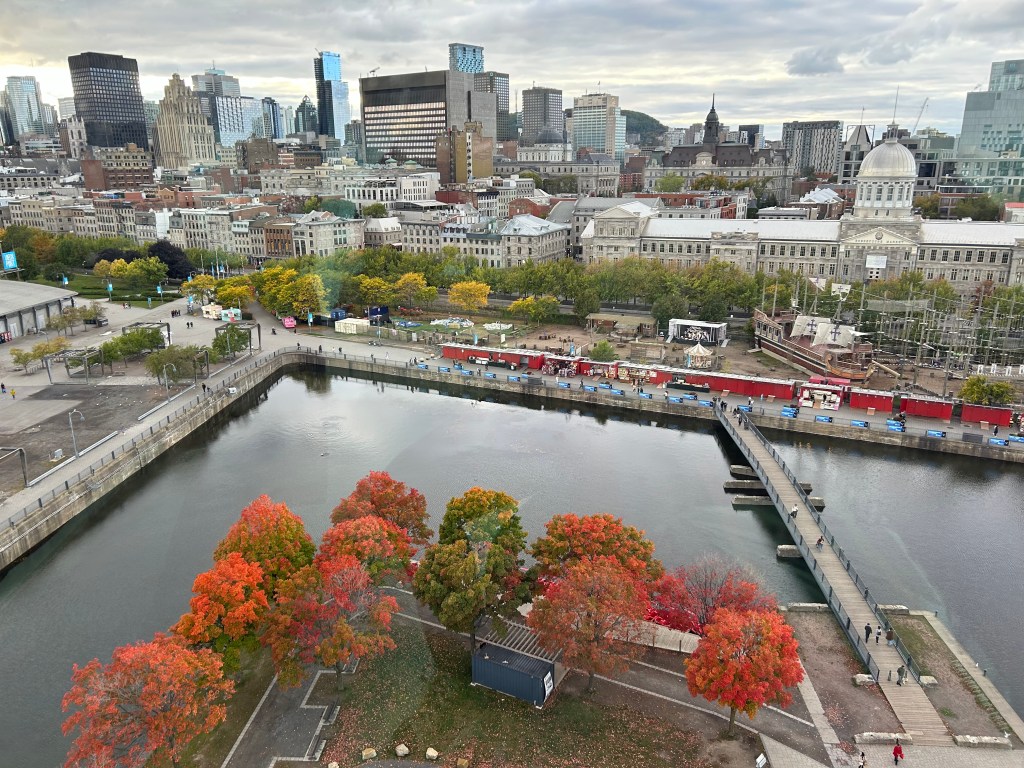
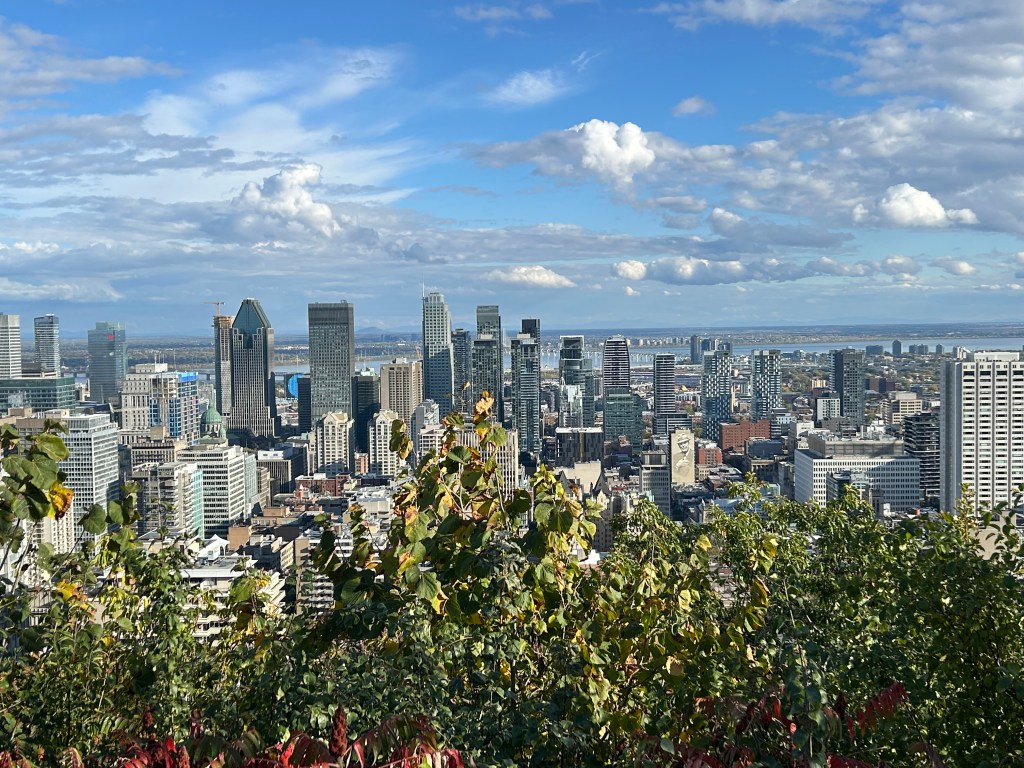
Scenes from Vermont
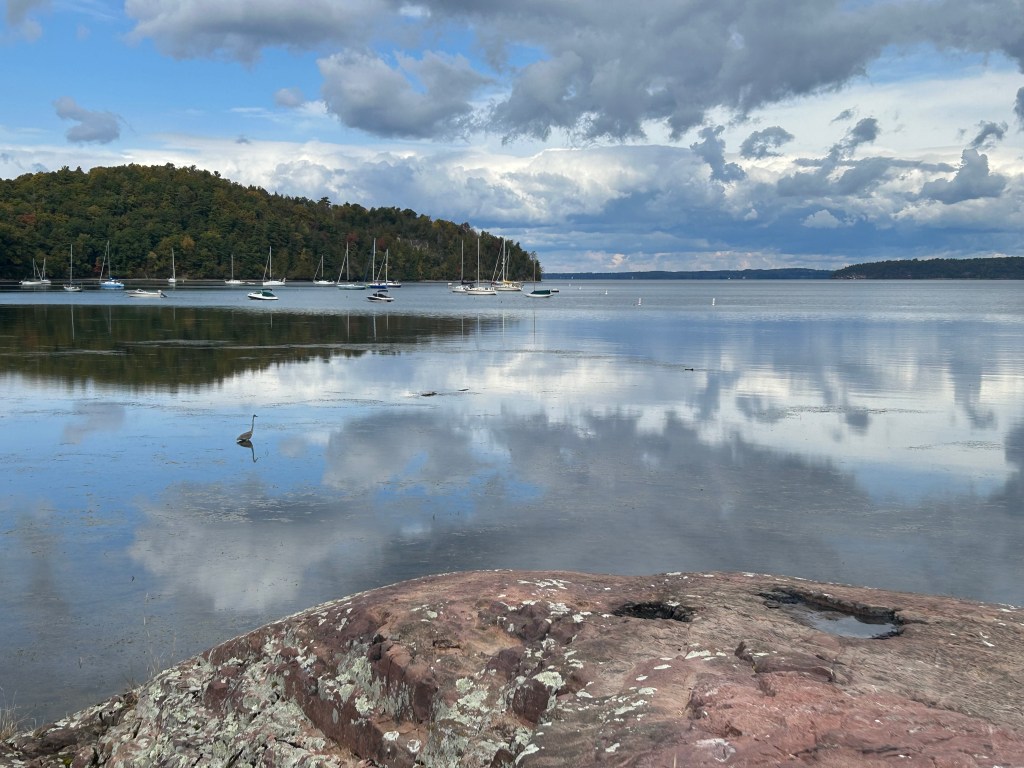
I was glad we were able to stick to smaller roads and highways as we slowly made our way back toward Logan Boston Airport with enough time for one more night on the road and a couple of short hikes. Yes, the trees were changing color in their spectacular New England way.

And now? I’m happy to be home and feel grateful for the opportunity to travel. While there are so many things so dire for many, and worrisome things ahead of all of us, in this moment I am thankful. And as suggested in one of my newest favorite songs (by The Head and the Heart), “…so just for one moment, let’s be still…”

Related Blogs:
Hello Third Great-Grandmother: An Interview
Pondering Privilege
From Northeast to West: Now and Then
Digging for Roots
Time Traveling to the Secrets of our Past: Part 1
Time Traveling to the Secrets of our Past: Part 2
 Dede's Books and blog
I appreciate most the scenes from Vermont, where I once lived. I also am reminded about the newness of our states out here when I spend time in the East.
LikeLiked by 1 person
Nice travel writing, thanks for sharing, when you make it this interesting.
I was inspired when I read this to look back at your post about early football in Portland. It was kind of a random selection, but also interesting. And if you haven’t already written it, a story about the two Methodist missionary expeditions that apparently brought your great-great grandmother and -father together would be fascinating. Where did they live? Who were they working to convert or save? How did they survive? Questions, questions, questions.
Keep up the good work.
LikeLike
Thank you for your kind words, Jim. My earliest book weaves in the story of Chloe and William (My Music Man is available in several OR libraries including Clack Co. It was a memoir I wrote after my dad died – you may remember him from Unity.) The short version: They both came with the Jason Lee Methodist Missionaries though different ships/years. They met when Chloe was posted as teacher at the short-lived Nisqually Mission where Willliam was the carpenter. Chloe is remembered with the namesake Chloe Clark Elementary school in Dupont WA. They then were moved to “The Falls” but moved to Salem in 1834 as they realized the missionary efforts were failing at least in their ideas for converting Indigenous Peoples. William was one of the Trustees for Willamette U., Chloe the first teacher and their land claim today encompasses downtown Salem, the Capitol and Willamette U. Adding to the “history” is that their eldest daughter married J.K. Gill…another long story. Maybe we should schedule time to meet sometime? And I may reach out for beta help if I ever get my WIP that far! https://dedemontgomery.com/the-book-my-music-man/
Also, my blogs related to Chloe, William Willson, J.K., and William Montgomery can be found under this category https://dedemontgomery.com/category/j-k-gill-chloe-william/
LikeLike